How to Sell My Note Fast: The Process, What Buyers Need, and How Deals Close Quickly
When the goal is immediate liquidity, “sell my note fast” is more than a search term—it’s a clear directive. Selling a private mortgage note, deed of trust, land contract, or contract for deed can be completed in days when you work with a direct note buyer. The key is a streamlined process, minimal paperwork, and certainty of close. Whether you hold a performing or non-performing asset, the right buyer will deliver a firm cash offer and absorb the heavy lifting, from due diligence to closing logistics.
The fastest path starts with a short intake. Expect a 10–15 minute conversation covering property address, unpaid principal balance, interest rate, monthly payment, remaining term, lien position, maturity date or balloon, and the borrower’s payment status. From there, upload or email the essentials: the promissory note, mortgage or deed of trust, any allonges or assignments, recent payment history, closing statement from origination (if available), and proof of taxes and insurance. Clean documentation translates into fewer questions, faster underwriting, and stronger pricing.
With the basics verified, an experienced team of real estate note buyers can price your asset quickly—often same day for standard residential notes. You’ll typically receive multiple options: a full buyout for maximum cash today, a partial sale for sellers who want liquidity now plus future residual payments, or a structured payout that balances tax strategy with speed. Pricing is locked in writing, and there are no broker markups or hidden fees when dealing direct.
Next comes a concise purchase agreement and immediate open of title or attorney escrow. Due diligence focuses on title updates, collateral integrity, and payment verification. Closings are commonly scheduled within 3–10 business days, with funds wired after execution of the assignment and endorsement of the note. A reputable buyer will cover standard closing costs, simplify paperwork, and coordinate with the servicer so there’s no payment disruption for the borrower. Even for non-performing assets, a direct buyer can underwrite efficiently, craft the appropriate recovery strategy, and still fund on a compressed timeline.
Searching for clarity on options and value? Review this guide to sell my note and see how a fast, no-fee transaction can convert payments into cash without surprises.
What Determines Your Cash Price: Practical Valuation Factors and How to Maximize Proceeds
When you request cash for promissory note, the offer you receive rests on measurable risk and return. The cleaner the collateral and payment history, the stronger the price. The most influential factors include loan-to-value (LTV) and borrower equity; payor credit profile and depth of seasoning; interest rate versus market yields; remaining term and any balloon date; lien position (1st versus 2nd); property type and location; documentation quality and enforceability; and current performance status. These elements define the discount rate a buyer must apply to meet their target yield.
Equity is king. A lower LTV—driven by a strong down payment or property appreciation—translates to less risk and tighter pricing spreads. Payment history matters too. Six to twelve months of on-time payments (seasoning) significantly improves confidence in the payor’s behavior. A higher interest rate often commands a premium, but the benefit may be tempered by short remaining terms or impending balloons, which can trigger refinance risk. First-position residential notes on owner-occupied properties typically price higher than junior liens, investor loans, or specialized collateral.
Documentation and enforceability are non-negotiable. A clear chain of assignments, properly executed note and deed of trust sale documents, accurate legal descriptions, and current taxes and insurance reduce friction and boost value. If the note is non-performing, buyers will price based on recovery scenarios: borrower’s hardship context, property condition, foreclosure timelines by state, and the cost to cure arrears or complete a workout. Markets with efficient legal processes may see stronger bids even for delinquent collateral.
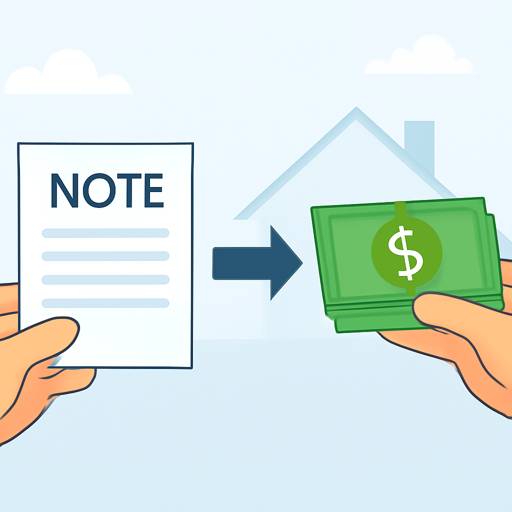
To maximize proceeds, present a complete, organized file: the note, mortgage or deed of trust, allonges, title policy or prior title evidence, payment ledgers, servicing records, escrow details, and evidence of insurance and tax status. If possible, update taxes and verify hazard coverage; small cleanups can yield big pricing improvements. Consider a partial sale if the discount on a full buyout is wider than desired; selling a set number of future payments can deliver meaningful liquidity while preserving a residual interest. Finally, communicate facts candidly—buyers reward transparency with faster underwriting and firmer offers.
Example: A $145,000 UPB 1st-position note at 8.25% on an owner-occupied home at 62% LTV, with 18 months of perfect payments, will typically price at a modest discount and close quickly. By contrast, a 2nd-position note at 90% combined LTV, two late pays in the last year, and a balloon in six months will require deeper yield and more diligence, but still can be sold rapidly with the right buyer.
Service Scenarios that Close in Days: Performing, Non-Performing, Partials, and Portfolios with a Direct Buyer
Private lenders, seller-finance holders, and investors often need speed and certainty, not a lengthy marketing process. Working with a direct buyer eliminates broker chains, reduces fees to zero, and compresses timelines. Whether you’re liquidating a single performing note to redeploy capital, exiting a non-performing position to stop the bleed, or selling a mixed portfolio, you can secure an executable offer fast and fund within days.
Performing notes: Ideal for liquidity events, diversification, or seizing new opportunities. A direct buyer evaluates credit, equity, and term structure, then proposes a full or partial sale. Partial sales are popular for holders who want to tap cash now while keeping a residual interest and upside. Because the borrower continues paying as usual—often through the same servicer—transition risk is minimized, keeping the experience stable for all parties.
Non-performing notes: NPNs demand expertise in workouts, repayment plans, and, if needed, legal remedies. A buyer prepared to handle forbearance, reinstatements, or cash-for-keys solutions can price swiftly and decisively. For sellers, this means immediate relief from advances, taxes, and servicing headaches. Instead of waiting months for a potential cure, convert to cash today and reallocate into performing assets. Expect buyers to focus on collateral value, occupancy, and state-specific timelines—then deliver a firm bid and fast wire once diligence confirms the thesis.
Portfolios and small balance pools: Investors looking to streamline operations can package assets by performance tier, geography, or lien position. A seasoned buyer can underwrite pools concurrently and provide tranche-level pricing with a single, coordinated close. This eliminates multiple counterparties, stacked fees, and lagging closings. If you carry legacy paper across several states, a nationwide buyer with title, legal, and servicing relationships can standardize diligence and accelerate funding.
Real-world examples illustrate the point. A landlord with a $120,000 performing 1st at 7.75% sold for near-par to capture a down payment for a new acquisition—closing in five business days. A small investor exited a $58,000 non-performing 2nd behind a low LTV 1st; the buyer funded in a week, absorbing workout risk and ending the seller’s advances. A fund disposed of a 12-note mixed pool across three states in one escrow, freeing capital for higher-yield opportunities. In each case, direct execution, no broker fees, and decisive underwriting turned “sell my note” into cash in hand—fast.
If timing matters, engage a direct buyer focused on speed and certainty: quick underwriting, transparent pricing, zero junk fees, and closings measured in days. Request your options—full, partial, or portfolio—and convert tomorrow’s payments into capital you can deploy today.

Edinburgh raised, Seoul residing, Callum once built fintech dashboards; now he deconstructs K-pop choreography, explains quantum computing, and rates third-wave coffee gear. He sketches Celtic knots on his tablet during subway rides and hosts a weekly pub quiz—remotely, of course.